
Construction Payment · General · 5 min read
By StreamLien · Published August 12, 2026 · Updated August 12, 2026
Why Waiting Until an Invoice Is Overdue Can Hurt Your Lien Workflow
Waiting until a construction invoice is overdue can leave your notice, document, and mailing records disorganized. Build the project record early.
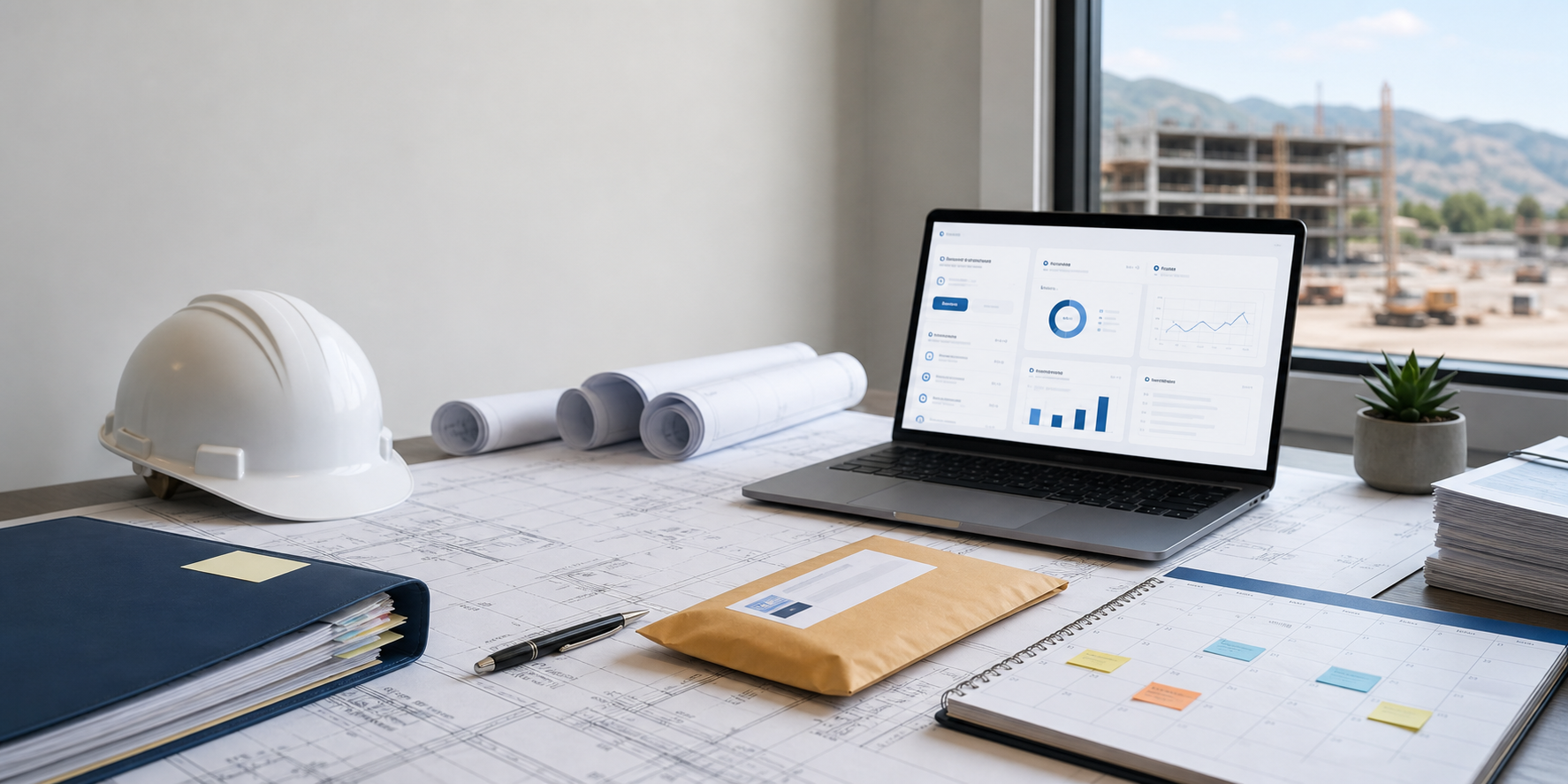
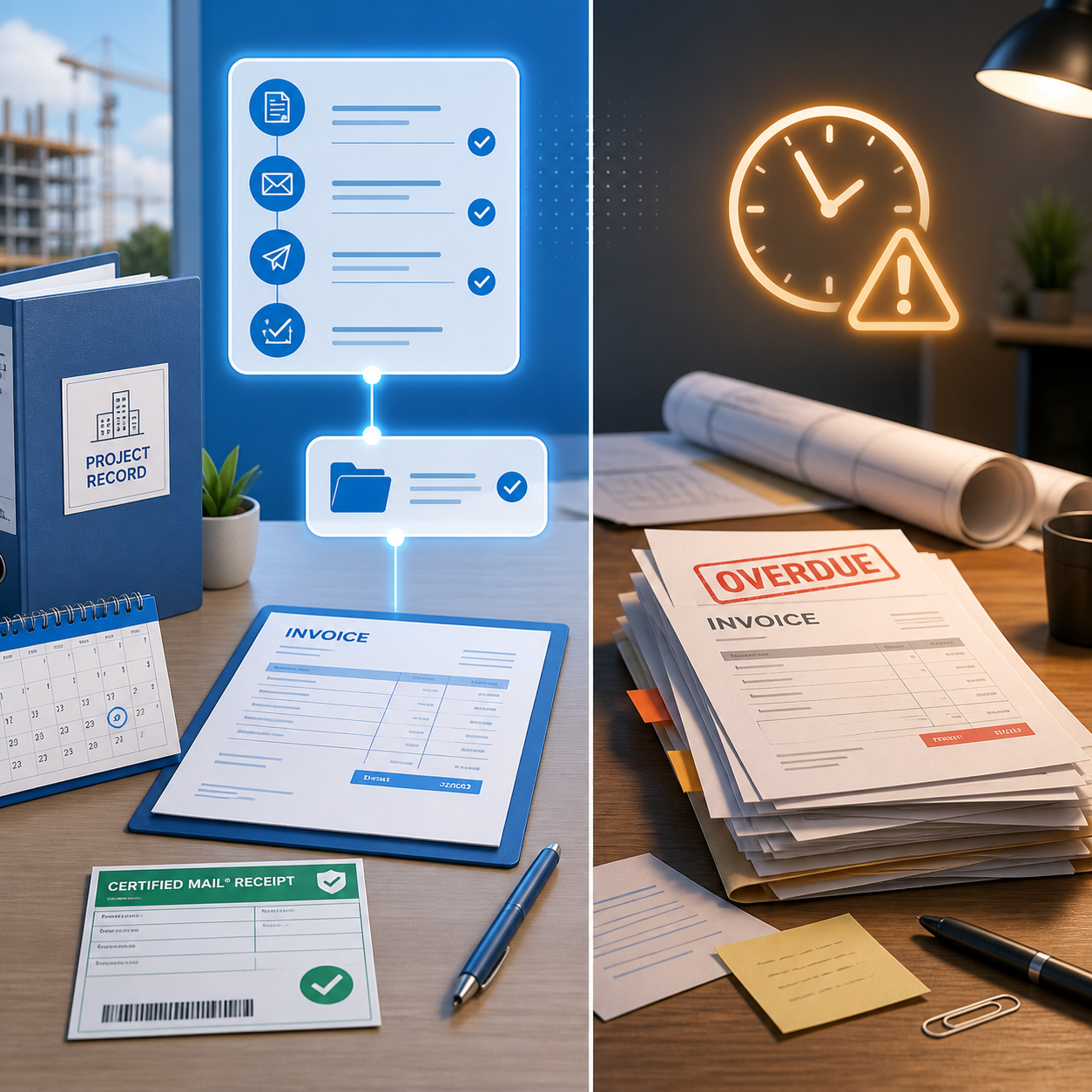
Late payments are part of construction. But waiting until an invoice is already overdue before you think about notice paperwork, mailing proof, or lien documents can make the payment problem harder to manage.
By the time an invoice is late, your team may already be scrambling to answer basic questions:
- Who is the property owner?
- Who is the direct contractor?
- Was a preliminary notice prepared?
- Who received it?
- Do we have proof of mailing?
- What work was performed, and when?
- Which invoices, change orders, and payment applications are still unpaid?
That is the problem StreamLien is built around: construction payment paperwork works best when the project record is organized early, not when the office is already in collections mode.
The payment problem usually starts before the invoice is overdue
Contractors often treat lien and notice paperwork like a last step: something to think about after the customer stops paying.
That is risky.
A strong lien workflow usually starts near the beginning of the project. Your file should already identify the project, the property, the owner, the direct contractor, your customer, the work, the first furnishing date, and any mailing or service records.
If those details are missing, your team may lose valuable time trying to rebuild the file later.
Late invoices create document chaos
When payment slows down, the office usually has more work, not less.
Someone has to follow up on the invoice. Someone has to check the contract. Someone has to look for change orders. Someone has to confirm what was shipped, installed, approved, disputed, or still pending.
If the project record is not already organized, the lien workflow becomes another emergency task.
That can lead to problems like:
- incomplete owner or contractor information;
- uncertainty about who should receive notices;
- missing proof of mailing or service;
- scattered invoices, change orders, and delivery tickets;
- confusion about project dates;
- rushed decisions about next steps.
StreamLien’s position is simple: do not wait for a payment dispute to build the file you may need for one.
Preliminary notice is part of the early project record
For many California construction participants, the preliminary notice is not just a form. It is part of the payment-rights record for the project.
That record should show what project the notice relates to, who the key parties are, what work or materials are involved, and how the notice was handled.
Even when a project is paying normally, keeping this information organized can make later follow-up easier. If payment becomes a problem, your team is not starting from zero.
Proof matters
Construction payment paperwork often depends on more than what a document says. Your file may also need to show how the document was handled.
That is why mailing records, certified-mail receipts, tracking information, and internal notes can matter. They help answer practical questions later:
- What was sent?
- When was it sent?
- Who was it addressed to?
- What proof do we have?
- Where is that proof stored?
A document workflow without proof is easier to attack, question, or misplace.
A simple payment-file checklist
Before an invoice becomes a collection problem, your project file should usually include:
- project name and job address;
- property owner information;
- direct contractor or general contractor information;
- your customer or hiring party information;
- description of labor, materials, or equipment;
- first furnishing or start-of-work date;
- signed contract, proposal, or purchase order;
- invoices and payment applications;
- approved and disputed change orders;
- delivery tickets, daily reports, or work records;
- preliminary notice copy, if one was prepared;
- mailing/service proof and tracking records;
- notes about payment follow-up and disputes.
This is not about overcomplicating the job. It is about making the payment file easy to understand before stress levels go up.
How StreamLien helps
StreamLien helps contractors, subcontractors, suppliers, and construction teams prepare important construction payment documents from an organized project record.
Instead of treating notice and lien paperwork like a one-off emergency form, StreamLien is designed around the workflow: project details, document preparation, records, and practical next steps.
That matters because the best time to organize payment-rights paperwork is usually before the payment problem becomes urgent.
Bottom line
An overdue invoice is a warning sign, not a paperwork strategy.
If your team waits until payment is already late to gather project details, confirm parties, prepare notices, and locate mailing proof, the lien workflow can become rushed and messy.
The better approach is to build the payment file early.
Start with the project record. Keep the notice paperwork organized. Save the proof. Make the next step easier before you need it.
Need a California preliminary notice prepared from an organized project record? StreamLien helps contractors, subcontractors, and suppliers prepare construction payment documents online.
This article is for general educational purposes only and is not legal advice. California construction notice and lien rules can be deadline-sensitive and fact-specific. Have legal/compliance language reviewed before relying on it.
FAQ
Why should I think about lien paperwork before an invoice is overdue?
Because the information needed for a lien or notice workflow is often easiest to collect early in the project. Waiting until payment is late can leave your team scrambling for owner information, contractor information, project dates, notice records, and proof of mailing.
Is a preliminary notice the same as a mechanics lien?
No. A preliminary notice and a mechanics lien are different documents used at different points in the payment-rights workflow. The exact requirements can depend on the project and the party involved, so the legal/compliance details should be reviewed before relying on them.
What records should a contractor keep for payment issues?
A practical file often includes the contract, project address, owner and contractor information, invoices, change orders, work records, preliminary notice documents, mailing proof, and payment follow-up notes.
Does StreamLien guarantee lien rights or payment?
No. StreamLien helps prepare and organize construction payment documents. It does not guarantee compliance, lien rights, payment, or legal outcomes.
Related resources
August 24, 2026
Disputed Construction Payment Application? Records to Save Before Escalating
When a construction payment application is disputed, reduced, or delayed, organize the contract, pay app, backup, notices, change orders, emails, waivers, and deadline records before escalating.
August 23, 2026
Lien Waiver and Release Records to Check Before a Construction Payment Dispute
Before escalating a construction payment dispute, organize lien waivers, releases, payment status, project dates, and notice records so your next step is based on facts—not guesswork.
August 22, 2026
Late Construction Payments and Payroll Risk: Records Subcontractors Should Organize
Late construction payments can become payroll risk. Organize contracts, invoices, pay apps, notices, waivers, change orders, and deadlines before escalating.