
Lien Releases · General · 9 min read
By StreamLien · Published August 23, 2026 · Updated August 25, 2026
Lien Waiver and Release Records to Check Before a Construction Payment Dispute
Before escalating a construction payment dispute, organize lien waivers, releases, payment status, project dates, and notice records so your next step is based on facts—not guesswork.
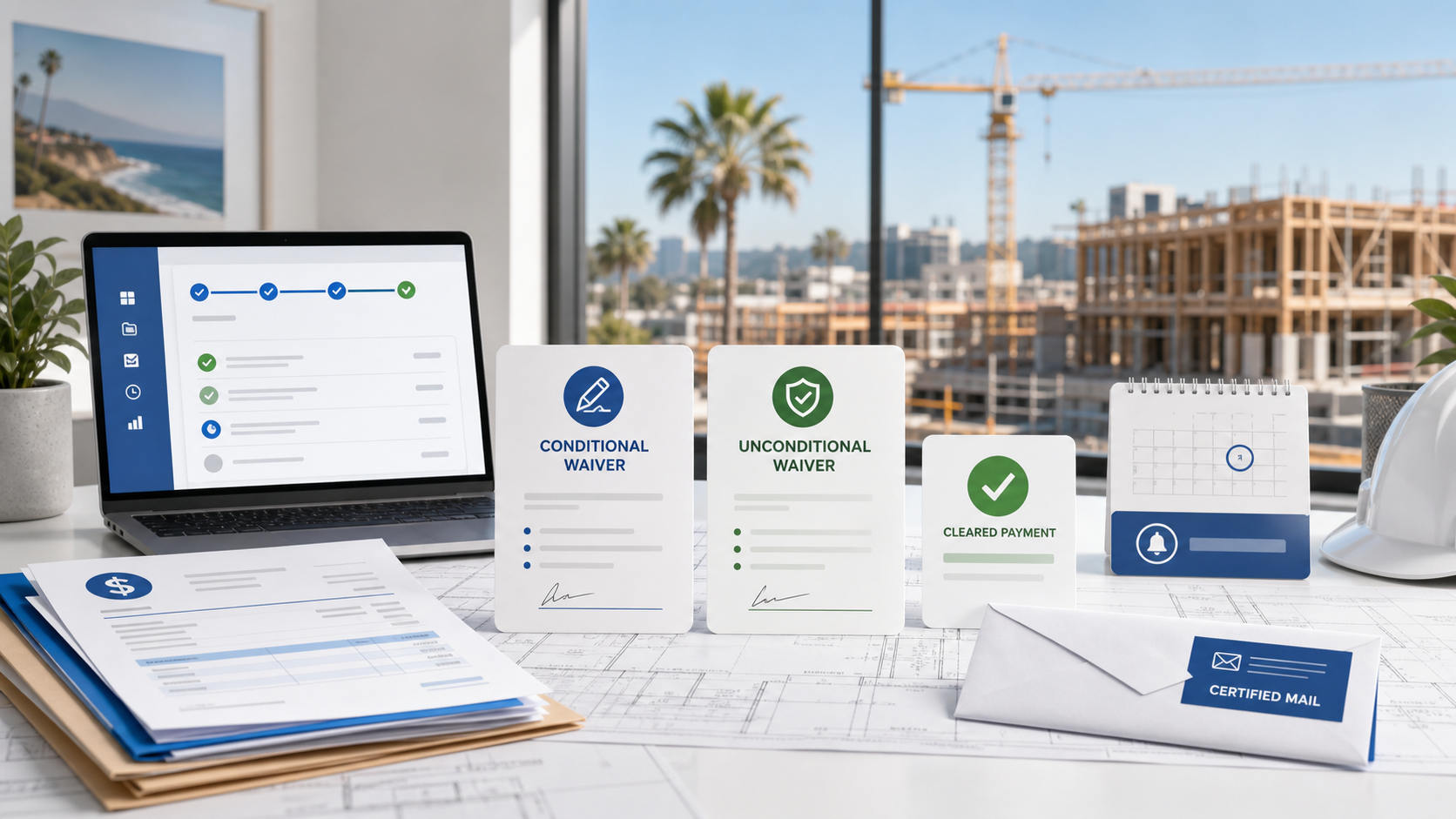
# Lien Waiver and Release Records to Check Before a Construction Payment Dispute
Late payment is frustrating enough on its own. It gets more complicated when the project file also includes lien waivers, releases, partial payments, disputed change orders, retention, or emails saying payment is “coming soon.”
Before you escalate a construction payment dispute, pause and organize the waiver and release record. That does not mean you need to become a lawyer overnight. It means you should know what has been signed, what payment it was tied to, whether funds cleared, and what project facts are still missing.
For subcontractors, suppliers, and small construction teams, that record can change the next conversation. It can also help avoid a rushed decision based on memory instead of documents.
This article is general information, not legal advice. Construction payment rights, lien waivers, releases, notices, deadlines, and service rules are state-specific and fact-specific. Have counsel review legal questions before relying on any deadline or document strategy.
Why waiver records matter before escalation
A lien waiver or release is not just another PDF in the project folder. It may describe a payment period, a payment amount, a scope of work, a progress draw, a final payment, or a release of certain rights.
That matters because payment disputes often develop in layers:
- The base contract amount may be partly paid.
- Change orders may be approved, rejected, or still pending.
- Retention may be held back.
- Materials may have been delivered but not fully paid for.
- A payment application may have been revised.
- A waiver may have been signed to keep payment moving.
- Funds may have been promised but not actually cleared.
If the file is disorganized, it is easy to lose track of what the waiver covered and what remains unpaid. The goal is not to jump straight to a legal conclusion. The goal is to build a clear factual record.
Start by separating waiver, release, and payment documents
Many project teams use “waiver” and “release” casually, but the documents in the file may do different things. Before deciding what to do next, create a simple list of every payment-rights document that has been exchanged.
For each item, capture:
- Document name or label.
- Date signed.
- Person or company that signed it.
- Project name and address.
- Payment application, invoice, or draw it relates to.
- Dollar amount shown on the document.
- Payment period or work period covered.
- Whether it was labeled conditional, unconditional, progress, partial, final, waiver, release, or something else.
- Whether the related payment was received.
- Whether the related payment actually cleared.
Do not rely on the file name alone. A PDF called “final waiver” may not answer every question by itself. Open the document and record the details that matter.
Confirm whether payment actually cleared
One of the biggest practical risks is treating promised payment the same as cleared payment.
Before escalating, match each waiver or release to the payment record behind it. Look for:
- Check date and check number.
- ACH or wire confirmation.
- Deposit date.
- Bank-cleared status.
- Any notice of reversal, stop payment, returned check, or failed transaction.
- Any email stating that payment was being held, revised, or delayed.
If your records show that a waiver was signed but payment never cleared, that fact belongs in the project file. If payment did clear, note the amount and date. Either way, the next person reviewing the file should not have to guess.
Match the waiver to the unpaid balance
A useful payment-dispute file separates what has been paid from what is still open.
Build a simple unpaid-balance summary:
- Original contract amount.
- Approved change orders.
- Pending or disputed change orders.
- Invoices or payment applications submitted.
- Amounts paid.
- Retention withheld.
- Credits, backcharges, or deductions asserted by others.
- Amount still claimed as unpaid.
Then compare that summary to the waiver and release history. The key practical question is not simply “Did we sign a waiver?” It is “What did the signed document appear to cover, and what balance are we still trying to collect?”
That comparison should be reviewed carefully before any demand letter, intent-to-lien letter, mechanics lien, stop payment notice, bond claim, or release workflow is prepared.
Keep preliminary notice and service records in the same file
Waiver history is only one part of payment-rights readiness. On many projects, notice and service records are just as important.
For California projects, project teams often need to know whether preliminary notice records exist, who received notice, when notice was served, and what proof of service is available. Public projects may involve different routing than private projects. Different roles on the project may also face different requirements.
For a practical project file, keep these records together:
- Preliminary notice documents.
- Proof of service or mailing records.
- Owner, general contractor, lender, surety, and bond information if available.
- First-furnishing or first-work date.
- Last-work or completion-related facts.
- Notice of completion or cessation information if received.
- Prior demands, warnings, or intent-to-lien communications.
- Waivers and releases.
- Payment history and open balance.
The more complete the record, the easier it is to route the issue for legal review or choose the correct next workflow.
Do not let deadline pressure create a messy record
When payment is late, pressure builds quickly. Payroll, material bills, equipment costs, and the next project do not wait politely while a payment dispute gets sorted out.
That pressure can lead to rushed decisions:
- Signing a document without matching it to the payment period.
- Sending a demand without confirming the unpaid balance.
- Assuming a private-project remedy applies to a public job.
- Forgetting to check preliminary notice records.
- Treating a promised payment as cleared funds.
- Overlooking retention or change-order carveouts.
A better approach is to create a short payment-rights review before escalation. It does not have to be fancy. It should answer the questions that repeatedly cause confusion.
A practical waiver-and-release checklist
Before the dispute escalates, organize these items:
- All signed waivers and releases. Include conditional, unconditional, progress, partial, and final documents.
- Unsigned drafts. Keep drafts separate from signed copies.
- Payment proof. Match each document to check, ACH, wire, deposit, or cleared-payment records.
- Invoices and pay applications. Identify the billing cycle, amount requested, and amount approved or rejected.
- Change orders. Separate approved, pending, rejected, and disputed changes.
- Retention. Track the amount withheld and the expected release event if known.
- Backcharges or deductions. Save written explanations and supporting documents.
- Preliminary notice records. Include service proof and recipient information.
- Project type. Note whether the job is private or public and whether bond/surety information exists.
- Communications. Save emails and texts about payment promises, disputes, approvals, rejections, and timing.
- Deadline facts. Record first work, last work, completion notices, and lien-related dates for legal review.
This checklist is not a substitute for legal advice. It is a way to make the legal and operational review faster, cleaner, and less dependent on memory.
When to involve legal review
If a dispute involves lien rights, waiver effects, public-project remedies, bond claims, stop payment notices, foreclosure deadlines, final releases, disputed change orders, or large unpaid balances, legal review is sensible.
A lawyer or qualified reviewer will still need the facts. A clean file helps them evaluate the issue more efficiently.
That file should show:
- What work or materials were provided.
- What was billed.
- What was paid.
- What remains unpaid.
- What documents were signed.
- What notices were sent.
- What deadlines may apply.
- What facts are disputed.
The earlier those facts are organized, the less likely the team is to make a high-pressure decision in the dark.
How StreamLien fits
StreamLien is built around guided construction payment document workflows. The practical value is not just preparing a form. It is helping project teams organize the project facts behind the document.
For waiver and release issues, that means treating the payment record as part of the workflow:
- What document was signed?
- What payment was it tied to?
- Did the funds clear?
- What balance is still open?
- Is this a private or public project?
- Are notice records available?
- What deadline facts should be reviewed before the next step?
That kind of structure helps contractors, subcontractors, and suppliers move from “I think we signed something” to a clearer payment-rights file.
Bottom line
A construction payment dispute should not be escalated from a messy folder.
Before you send the next warning, prepare the next document, or route the issue for legal review, gather the waiver and release history, match it to actual payment records, separate paid and unpaid amounts, and keep notice records in the same file.
The next step may still require legal judgment. But the facts should be organized first.
FAQ
Is this legal advice about lien waivers or construction payment rights?
No. This article is general information for organizing construction payment records. Lien waivers, releases, preliminary notices, mechanics liens, stop payment notices, bond claims, deadlines, and service rules are state-specific and fact-specific. Have counsel review legal questions before relying on a strategy.
What is the first thing to check if a lien waiver was signed but payment is late?
Start by matching the signed document to the payment it was supposed to relate to. Record the date signed, amount, payment period, invoice or draw, and whether the payment actually cleared.
Should waiver records be kept separate from invoices?
They can be stored separately, but they should be cross-referenced. A useful project file connects each waiver or release to the invoice, payment application, check, ACH, wire, or deposit record behind it.
Why does cleared payment matter?
A promised payment, pending transfer, returned check, or uncleared deposit may create a different practical record than payment that has fully cleared. Do not assume those facts are the same.
Do waiver records replace preliminary notice or deadline records?
No. Waiver history is only one part of the project file. Notice records, service proof, project type, party information, work dates, completion-related facts, and communications may all matter.
Can StreamLien decide the legal effect of a signed waiver?
StreamLien can help organize project facts and prepare guided document workflows. Legal-effect questions about a specific waiver, release, deadline, lien, stop payment notice, or bond claim should be reviewed by counsel or an authorized legal reviewer.
Related resources
August 24, 2026
Disputed Construction Payment Application? Records to Save Before Escalating
When a construction payment application is disputed, reduced, or delayed, organize the contract, pay app, backup, notices, change orders, emails, waivers, and deadline records before escalating.
August 22, 2026
Late Construction Payments and Payroll Risk: Records Subcontractors Should Organize
Late construction payments can become payroll risk. Organize contracts, invoices, pay apps, notices, waivers, change orders, and deadlines before escalating.
August 21, 2026
The GC Says the Owner Hasn't Paid: What Records Should a California Subcontractor Organize?
If the GC says the owner has not paid, organize the contract, invoices, change orders, notices, waiver history, payment-chain facts, and deadlines before escalating.