
Mechanics Liens · California · 4 min read
By StreamLien · Published July 10, 2026 · Updated August 14, 2026
What Can Go in a California Mechanics Lien Amount—and What Should Stay Out
The amount of a California mechanics lien should be built from the project accounting, not frustration. Know what belongs, what needs review, and what can create risk.
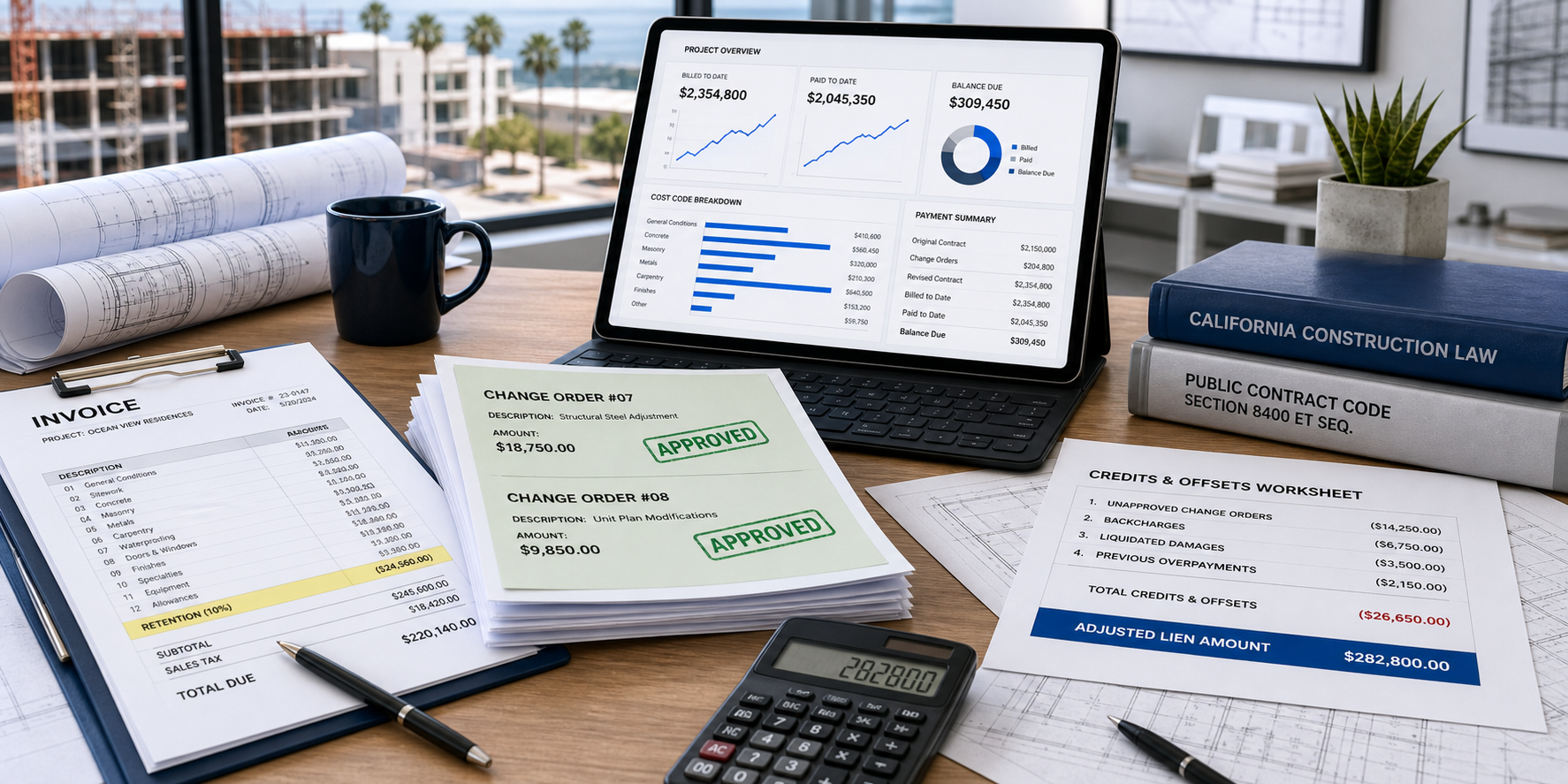
When payment is overdue, it is tempting to put every frustrating cost into the mechanics lien amount. That is risky.
A California mechanics lien amount should be built from the project accounting and the lien rules, not from pressure, anger, or a general sense that the project went badly.
The attached research materials emphasize a core idea: the lien amount needs to be tied to labor, services, equipment, and materials actually furnished to the project, with credits and offsets deducted.
Start with the contract and approved changes
The lien amount usually starts with the unpaid contract work. Then the file should identify approved written change orders and any disputed or oral extras that require separate review.
A good file should show:
- original contract amount;
- approved change orders;
- invoices issued;
- payments received;
- unpaid retention;
- credits and offsets;
- backcharges or disputes;
- work tied to the specific property; and
- the final principal lien amount.
If the file cannot show how the number was calculated, the number is not ready.
Retention may belong, but it still needs support
Retention is a common construction-payment issue. If retention is unpaid and tied to lienable work, it may be part of the lien amount analysis.
But retention should not be guessed. It should be reconciled against the contract, pay applications, payments, waiver forms, project status, and any closeout documents.
Materials, equipment, freight, and related charges need project connection
For suppliers and equipment lessors, the project connection is critical. The research materials focus on labor, services, equipment, and materials actually furnished to the work of improvement.
That means the file should tie materials, equipment, delivery, and related costs to the specific project and property. If the work or materials belong to a different job, they should not be pushed into this lien.
Deduct credits and offsets before recording
A claim of lien should account for just credits and offsets. That sounds simple, but it is one of the easiest places for errors.
Before recording, reconcile payments, joint checks, waiver through-dates, credits, returned materials, agreed offsets, backcharges, and partial settlements.
Do not let the lien amount become a stale receivable number copied from accounting without review.
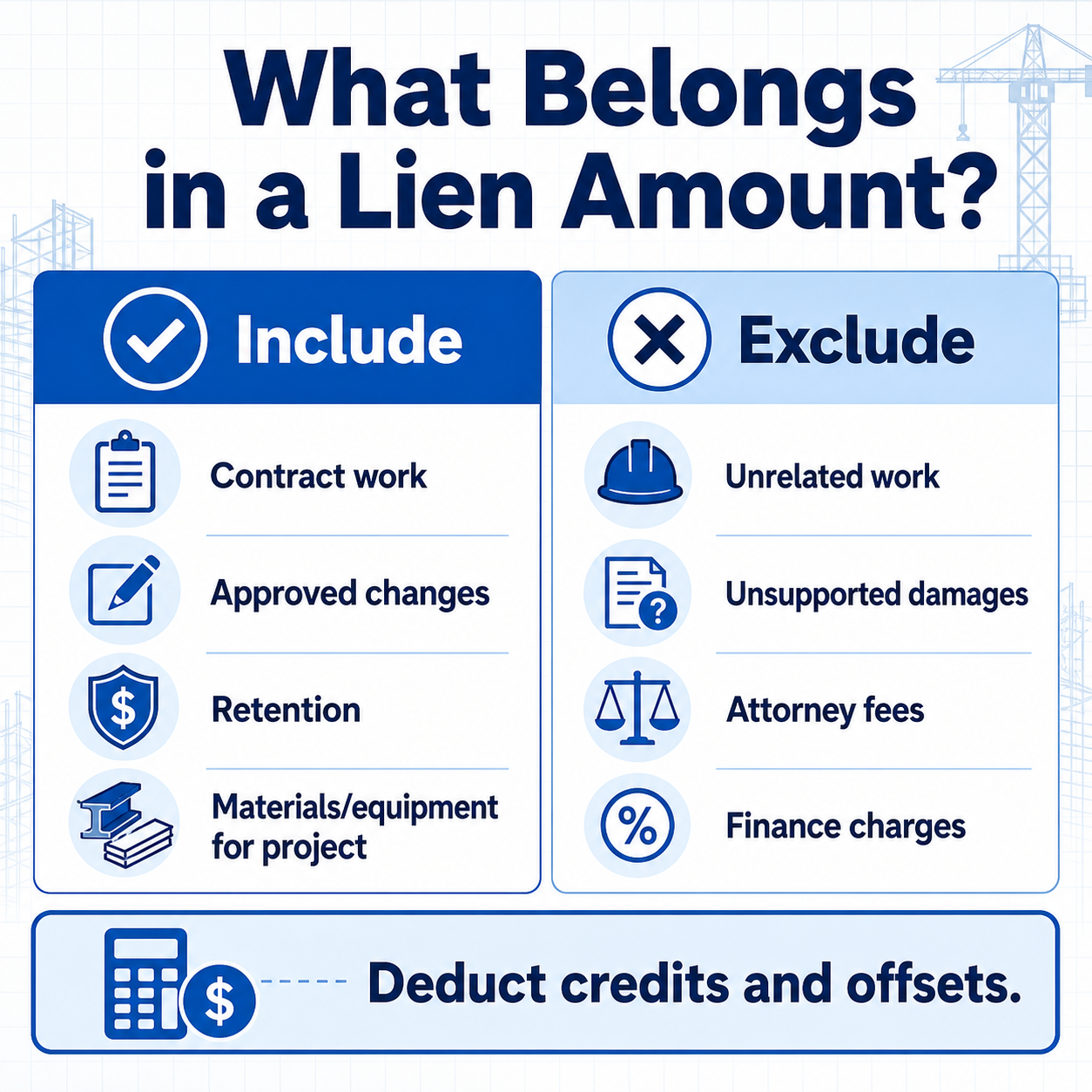
Some amounts may not belong in the lien
The research materials flag categories that require caution, including unsupported damages, unrelated work, attorney fees, finance charges, delay or impact damages, lost profits, and other consequential amounts.
That does not mean every billing dispute is simple. It means the lien amount should be reviewed with care before recording.
If an amount is not tied to labor, services, equipment, or materials furnished for the property, it may create overstatement risk.
Overstatement can create more than a math problem
Not every mistake automatically destroys a lien. California law can treat some good-faith errors differently from intentional overstatements or willful inclusion of unrelated work.
But that distinction is not a reason to be loose. A lien claimant should not rely on “we can explain it later.” The better workflow is to prepare a written amount calculation before recording and keep it in the file.
The checklist’s instruction is practical: maintain a written calculation showing the contract amount, change orders, payments, credits, offsets, allocation, and final lien principal.
Multiple parcels, units, or phases need extra care
If the work involves multiple parcels, units, buildings, phases, contracts, or works of improvement, allocation may matter.
A single project accounting number may not answer which property, unit, or work of improvement received which labor or materials. The lien workflow should identify the project structure early so the amount can be allocated or separated where necessary.
StreamLien helps make the amount review visible
The biggest mistake is treating the lien amount as a single blank on a form.
StreamLien’s workflow approach helps organize the supporting documents behind the number: contract, changes, invoices, payments, credits, offsets, retention, project connection, and final calculation.
That does not replace legal review for disputed or unusual amounts. But it helps make the review possible before the document is recorded.
FAQ
Can I include the full unpaid invoice balance in a mechanics lien?
Not automatically. The invoice balance should be reviewed against the contract, change orders, payments, credits, offsets, lienable categories, and project-specific work.
Can attorney fees go in the lien amount?
The research materials flag attorney fees as a category that should not simply be included in the lien amount. Any fee-related issue should be reviewed carefully before publication or use.
Why do credits and offsets matter?
The lien demand should reflect the amount claimed after deducting appropriate credits and offsets. A failure to reconcile payments and credits can create avoidable risk.
How can StreamLien help with lien amount review?
StreamLien helps organize the project accounting and supporting file so the number is easier to review before recording.
Suggested CTA
Before recording a California mechanics lien, build the amount from documents—not memory. StreamLien helps organize the contract, change orders, invoices, payments, credits, offsets, retention, and project records in one managed workflow.
Related resources
August 24, 2026
Disputed Construction Payment Application? Records to Save Before Escalating
When a construction payment application is disputed, reduced, or delayed, organize the contract, pay app, backup, notices, change orders, emails, waivers, and deadline records before escalating.
August 23, 2026
Lien Waiver and Release Records to Check Before a Construction Payment Dispute
Before escalating a construction payment dispute, organize lien waivers, releases, payment status, project dates, and notice records so your next step is based on facts—not guesswork.
August 22, 2026
Late Construction Payments and Payroll Risk: Records Subcontractors Should Organize
Late construction payments can become payroll risk. Organize contracts, invoices, pay apps, notices, waivers, change orders, and deadlines before escalating.