
Mechanics Liens · California · 5 min read
By StreamLien · Published July 11, 2026 · Updated August 27, 2026
California Claim of Mechanics Lien: The Form, Service, and Recording Details That Matter
A California claim of mechanics lien is not just a form. The details, statutory notice, service, proof of service, and recorder acceptance all matter.
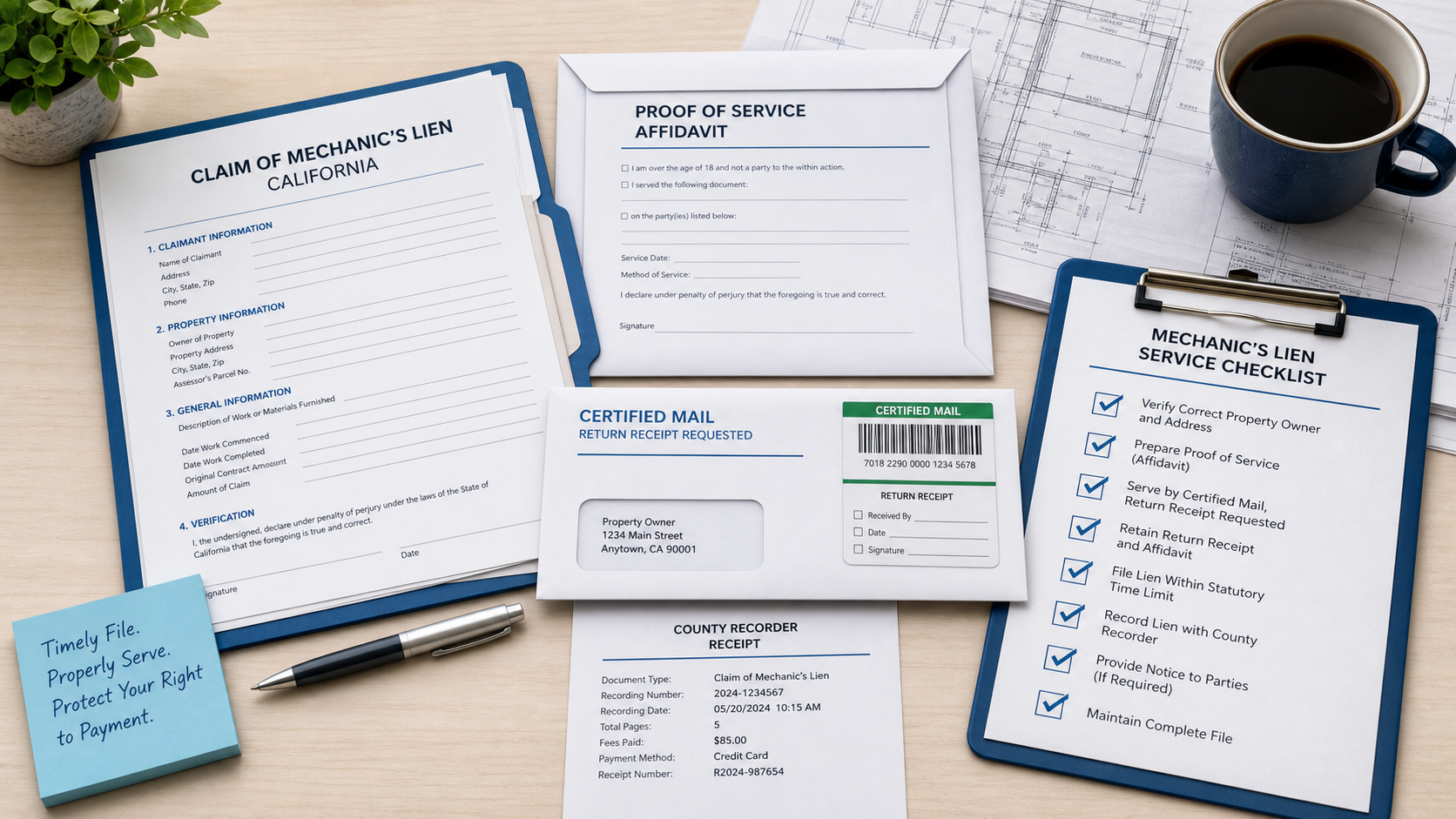
A California claim of mechanics lien is more than a document title and an unpaid balance. The lien package has to line up the claimant, the property, the owner, the hiring party, the amount, the statutory notice, service, proof of service, and recording.
That is why the safest mindset is: do not treat the claim of lien as one form. Treat it as a controlled document package.
Start with the exact claimant
The claimant name should match the business that contracted, performed, invoiced, and remains unpaid. If the business used a trade name, changed entities, assigned receivables, merged, converted, or had licensing issues, those facts should be reviewed before the lien is prepared.
The attached checklist properly starts with claimant identity, authority, and licensing. That is not paperwork trivia. It affects whether the lien document identifies the right party and whether the signer has authority to verify it.
Confirm owner, hiring party, and property information
A claim of lien needs enough property information to identify the site. It also needs the owner or reputed owner, the person who hired the claimant or to whom work was furnished, and a general description of the labor, services, equipment, or materials.
For practical purposes, the lien file should collect:
- current owner or reputed owner;
- owner at commencement, if relevant;
- direct contractor or reputed direct contractor;
- construction lender or reputed lender, if known;
- person who hired the claimant;
- street address;
- assessor’s parcel number;
- legal description, if available;
- building permit information; and
- title or deed information when needed.
Bad project data can create downstream risk. It can also slow the process when the deadline is already tight.
Calculate the amount after credits and offsets
The lien demand should not be a rough emotional number. It should be tied to the project accounting.
The checklist calls for the original contract amount, approved change orders, invoices, payment records, credits, offsets, retention, disputed backcharges, and allocation across parcels or phases where applicable.
That matters because California lien law distinguishes between amounts tied to labor, services, equipment, and materials furnished to the improvement and amounts that may not belong in a lien claim.
Include the required lien notice and verification
The research materials identify the statutory Notice of Mechanics Lien and formatting as a core part of the claim. The claim must be written, signed, verified, and include required information.
A process problem here can become a lien problem. Before recording, the file should be checked for missing placeholders, internal notes, incorrect names, unsupported amounts, missing verification, missing statutory notice, and formatting issues that could trigger recorder rejection or legal challenge.

Service is a separate statutory task
Serving the owner is not optional busywork. The attached flowchart makes this point clearly: treat service as a separate statutory task.
A copy of the claim of lien, including the required notice, must be served as required. The proof-of-service affidavit must be completed and included with the recorded lien package.
The file should retain mailing evidence, certificates, tracking, returned mail information, and any follow-up records. If service is handled casually, the lien may be challenged even if the form itself looks complete.
Recorder submission is not the same as accepted recording
A lien deadline should not be managed as “we mailed it” or “we uploaded it.” The workflow should confirm recordation.
The checklist flags submission method, recorder fees, rejection monitoring, correction before the original deadline, recording date, recording time, instrument number, and a recorded copy.
That distinction matters because a rejected document can miss the deadline. A managed workflow should confirm acceptance, not just attempted submission.
After recording, calendar the next deadline immediately
Recording a claim of lien is not the final step. The post-recording period must be controlled.
The checklist calls for calculating the 90-day post-recording expiration date, double-checking it, calendaring reminders, documenting payment negotiations, monitoring bond or release issues, and referring enforcement early enough if needed.
A lien that is recorded and then forgotten can expire.
StreamLien helps organize the lien package
The key value is process control. Contractors and suppliers do not just need a lien form. They need a way to manage the project record, required fields, supporting documents, service proof, recorder status, and post-recording dates.
StreamLien helps turn the claim of lien from a rushed paperwork event into an organized workflow for review and follow-up.
FAQ
What information goes into a California claim of mechanics lien?
The claim generally needs claimant information, owner or reputed owner information, a description of the work, the hiring party, the lien amount after credits and offsets, a sufficient property description, statutory notice language, verification, and proof of service.
Is service separate from recording?
Yes. Service and proof of service are separate workflow items that should be tracked and documented before or with recording.
Is mailing the lien to the recorder enough?
The workflow should confirm accepted recordation and retain the instrument number and recorded copy. Submission alone is not the same as a completed, accepted recording.
Why does StreamLien focus on checklists?
Because many lien problems are process problems: missing information, bad dates, unsupported amounts, weak proof, or failure to calendar what happens after recording.
Suggested CTA
Before you record, run the lien package through a checklist. StreamLien helps organize the claim information, document packet, service proof, recorder tracking, and post-recording deadline controls.
Related resources
August 24, 2026
Disputed Construction Payment Application? Records to Save Before Escalating
When a construction payment application is disputed, reduced, or delayed, organize the contract, pay app, backup, notices, change orders, emails, waivers, and deadline records before escalating.
August 23, 2026
Lien Waiver and Release Records to Check Before a Construction Payment Dispute
Before escalating a construction payment dispute, organize lien waivers, releases, payment status, project dates, and notice records so your next step is based on facts—not guesswork.
August 22, 2026
Late Construction Payments and Payroll Risk: Records Subcontractors Should Organize
Late construction payments can become payroll risk. Organize contracts, invoices, pay apps, notices, waivers, change orders, and deadlines before escalating.